What a dialysis centre RO water system actually needs
Water quality standards, sizing, and the maintenance that keeps a dialysis unit compliant.
Water is the single most critical input in haemodialysis. A patient undergoing three sessions per week is exposed to a very large volume of dialysis-grade water at every session. Contaminants that would be harmless in drinking water — bacteria, endotoxins, chlorine, chloramines, heavy metals — can cause serious harm when they cross the dialyser membrane into the bloodstream.
Water quality standards
Dialysis water is commonly specified against the international standard ISO 23500 (which consolidated the earlier AAMI water and dialysate standards). Its widely cited limits for dialysis water include:
- Chemical contaminants: maximum allowable concentrations for listed toxic and trace elements
- Microbial count: < 100 CFU/mL, with an action level of 50 CFU/mL
- Endotoxins: < 0.25 EU/mL, with an action level of 0.125 EU/mL
RO system sizing
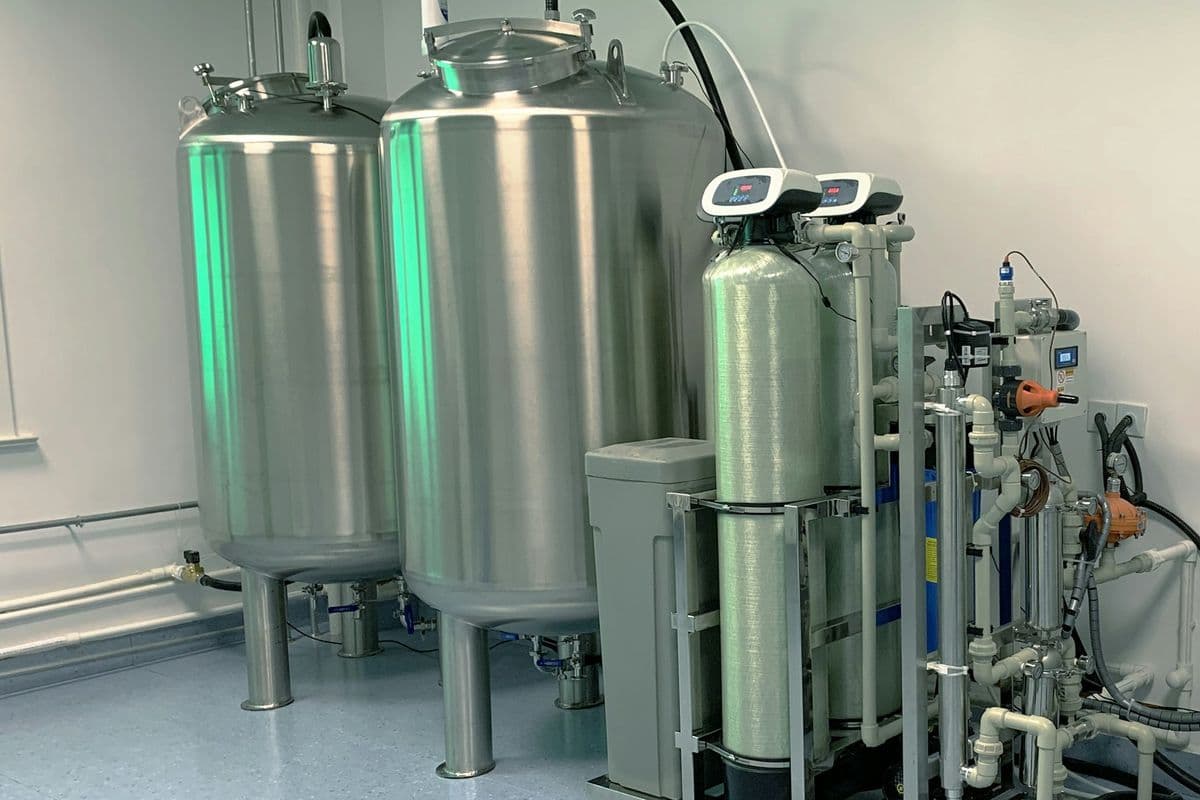
Size your RO system to produce comfortably more than the peak dialysis water demand — machine water consumption × number of stations × a safety factor (1.5× is a common planning figure). Ask your supplier to calculate this from the specific machines you will run, plus any reuse or bicarbonate-mixing demand.
The pre-treatment train matters
An RO membrane alone cannot protect against all contaminants. A typical pre-treatment train includes:
- Sediment pre-filters
- Carbon filters for chlorine and chloramine removal
- A water softener for scale prevention
- RO membranes
- Optional polishing or UV disinfection, depending on design
Maintenance schedule
| Task | Frequency |
|---|---|
| Filter cartridge replacement | Monthly or per pressure differential |
| Carbon filter replacement | Per chloramine test results and design |
| RO membrane cleaning | Per manufacturer schedule |
| Water culture sampling | Monthly |
| Full water quality report | Per your licensing requirements |
MCVSIX (via TMD Dialysis) supplies, installs, and maintains RO water systems for dialysis centres. Contact us for a sizing consultation.
This article is general guidance. Always follow the manufacturer’s instructions for use and confirm requirements that apply to your facility.
All resources
Dialysis Solutions
Dialysis machines, reverse-osmosis water systems, chairs, and consumables — delivered and installed via TMD.